

Introduction
A whiteboard looks simple, but anyone who uses one daily knows how quickly it can become stained, dull, or difficult to erase. Marker shadows, old ink, dust, fingerprints, and the wrong cleaning products can all make the surface look dirty even after wiping it. That is why learning how to clean a whiteboard properly matters, whether you use it in a classroom, office, meeting room, home study space, or workshop.
A clean whiteboard is not only about appearance. It helps your writing look clearer, saves time during meetings, and keeps the board useful for longer. Many people damage their whiteboards by scrubbing too hard, using harsh cleaners, or leaving ink on the surface for weeks. The good news is that most whiteboard stains can be removed with simple methods if you use the right materials and avoid common mistakes.
In this guide, you will learn how to clean a whiteboard using seven proven tips that are safe, practical, and easy to follow.
BIO
| Label | Information |
|---|---|
| Topic | How to Clean a Whiteboard |
| Content Type | Cleaning Guide |
| Main Purpose | Remove stains and residue |
| Suitable For | Offices, schools, homes |
| Surface Type | Dry-erase whiteboard |
| Daily Tool | Microfiber cloth |
| Deep Cleaning Option | Rubbing alcohol |
| DIY Cleaner | Vinegar and water |
| Common Problem | Ghosting and marker stains |
| Prevention Tip | Erase writing regularly |
| Recommended Markers | Quality dry-erase markers |
| Maintenance Frequency | Daily, weekly, and monthly |
| Key Benefit | Longer-lasting clean surface |
Why Whiteboards Get Dirty
Whiteboards become dirty because dry-erase markers leave behind a thin layer of ink residue. When the board is erased quickly, some of that residue may stay on the surface. Over time, it builds up and creates dull marks, smudges, and faint shadows.
Another common problem is ghosting. This happens when old writing leaves a light outline even after the board is erased. Ghosting is usually caused by marker chemicals, dust, oils from hands, or using poor-quality markers.
The board can also become harder to clean if it is cleaned with the wrong products. Abrasive pads, rough cloths, wax-based cleaners, and strong chemicals can damage the writing surface. Once the surface is damaged, marker ink sticks more easily.
Supplies You Need
Before cleaning, gather the right items. You do not need expensive tools for everyday cleaning, but using safe materials makes a big difference.
You may need a microfiber cloth, whiteboard cleaner, rubbing alcohol, clean water, a spray bottle, vinegar, paper towels, and a fresh dry-erase marker. For regular use, a microfiber cloth and a quality whiteboard cleaner are usually enough.
Avoid rough sponges, steel wool, scouring powder, bleach, and oily cleaners. These can scratch or coat the board, making future writing harder to erase.
Tip 1: Use a Microfiber Cloth Daily
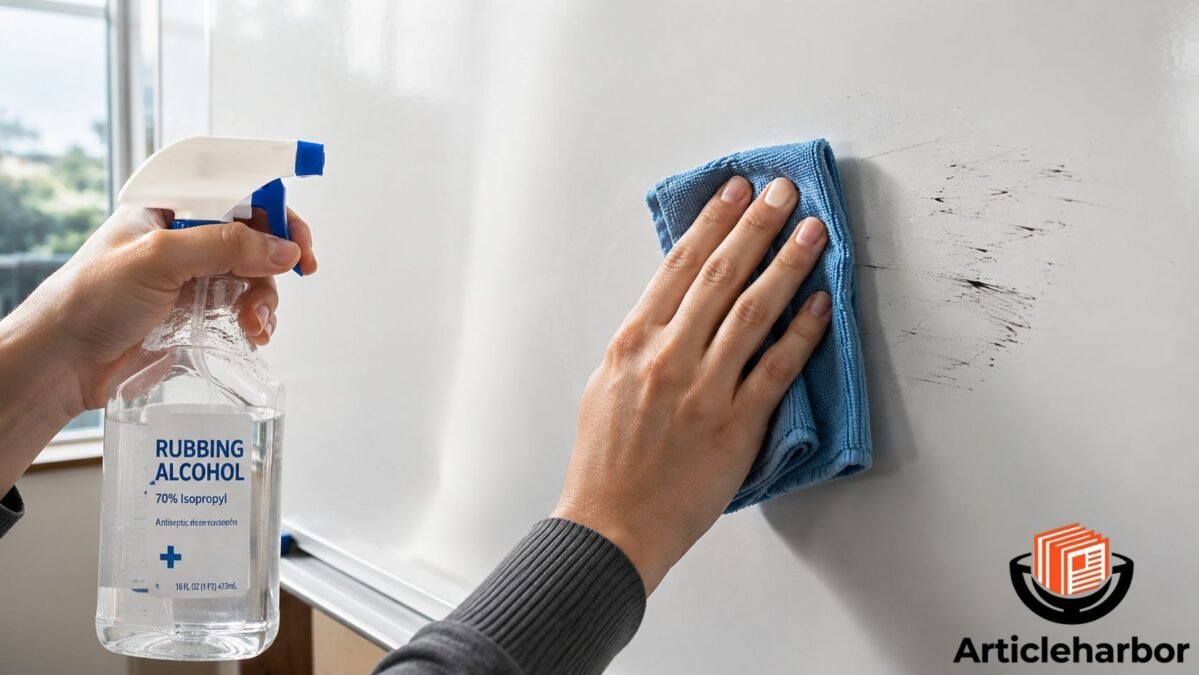
The easiest way to keep a whiteboard clean is to wipe it daily with a soft microfiber cloth. Microfiber works better than rough paper towels because it lifts dust and marker residue without scratching the surface.
If you use the board often, erase it at the end of each day. Do not leave writing on the board for too long, especially in warm rooms or direct sunlight. Old ink becomes harder to remove because it settles into the surface.
Use light pressure when wiping. Pressing too hard is not necessary and may spread the ink instead of removing it. Start from one side of the board and move across in smooth strokes. This keeps the cleaning even and prevents cloudy patches.
For schools, offices, or training rooms, keeping a clean microfiber cloth near the board is a smart habit. It makes daily cleaning simple and helps prevent deep stains.
Tip 2: Use Whiteboard Cleaner Weekly
Daily erasing removes most fresh marker ink, but it does not always remove hidden residue. That is why a proper whiteboard cleaner should be used at least once a week, especially on boards that are used every day.
Spray a small amount of cleaner onto a soft cloth instead of spraying too much directly onto the board. Wipe the surface gently from top to bottom. Then use a dry cloth to remove any moisture left behind.
Whiteboard cleaner is useful because it is made for dry-erase surfaces. It helps remove ink residue without leaving a heavy film. This keeps the board smooth and easier to erase.
Do not overuse cleaner. Too much liquid can run into the frame edges, which may damage the board over time. A light, even cleaning is enough for most boards.
Tip 3: Remove Ghosting with Rubbing Alcohol
If your board still shows old writing after erasing, you may be dealing with ghosting. One of the most effective ways to remove ghosting is to use rubbing alcohol, also known as isopropyl alcohol.
Mix rubbing alcohol with water or use a small amount on a soft cloth. Wipe the stained area gently until the old marks begin to lift. After cleaning, wipe the board again with a damp cloth and then dry it completely.
This method works well because alcohol breaks down the marker residue that regular erasing leaves behind. It is especially helpful for old shadows, stubborn smudges, and boards that have not been deep cleaned in a while.
However, do not use alcohol every day. It is best for occasional deep cleaning. Frequent use may dry out some board surfaces, depending on the quality and type of board. For normal cleaning, use a microfiber cloth or whiteboard cleaner.
Tip 4: Try Vinegar and Water
If you prefer a simple household cleaning method, vinegar and water can help with light stains and general cleaning. Mix one part white vinegar with several parts water in a spray bottle. Apply a small amount to a cloth and wipe the board gently.
Vinegar is useful for removing dust, mild residue, and surface grime. It can also help freshen up a board that looks cloudy or dull. After wiping, use a clean damp cloth to remove any vinegar smell, then dry the surface.
This method is best for light cleaning, not heavy ghosting. If the board has deep stains or old marker shadows, rubbing alcohol or whiteboard cleaner will usually work better.
Avoid using too much vinegar. A small amount is enough. The goal is to clean the board without soaking it.
Tip 5: Use a Fresh Marker on Old Marks
One of the simplest tricks for removing old dry-erase marks is to write over them with a fresh dry-erase marker. This may sound strange, but it often works very well.
Dry-erase marker ink contains solvent that can loosen old marker residue. To try this method, use a fresh marker to trace over the old stain. Wait a few seconds, then wipe it away with a clean cloth or eraser.
This trick is especially helpful when old marks are small or when you do not have cleaner nearby. It can also work when someone used a dry-erase marker and left the writing on the board for several days.
Make sure you use a dry-erase marker, not a permanent marker. If a permanent marker was used by mistake, the same method may still help, but you will need to clean carefully and repeat if needed.
Tip 6: Deep Clean the Board Monthly
Even if your whiteboard looks clean, it benefits from a monthly deep clean. This removes hidden residue and helps the board stay smooth.
Start by erasing all writing. Then wipe the surface with a dry microfiber cloth to remove dust. Next, use whiteboard cleaner or a light alcohol-water solution. Wipe the whole board evenly, including corners and edges.
After cleaning, dry the board completely. Never write on the board while it is still damp. Moisture can make marker ink spread or stick unevenly.
A monthly deep clean is especially important for boards in classrooms, offices, restaurants, coaching centers, and shared workspaces. These boards are touched and used by many people, so they collect more oils and residue.
If your board is used heavily, you may need to deep clean it every two weeks instead of once a month.
Tip 7: Prevent Future Stains
The best way to clean a whiteboard is to stop stains before they become difficult. Good habits can protect the board and reduce cleaning time.
Use only quality dry-erase markers. Cheap or old markers may leave more residue and can stain faster. Replace markers when they become dry, weak, or streaky.
Do not leave writing on the board for weeks. Even dry-erase ink can become stubborn if it stays too long. Erase the board at the end of the day whenever possible.
Keep hands away from the writing surface. Oils from fingers can make ink stick in certain spots. If people often touch the board, clean it more often.
Store markers horizontally and keep caps closed. Dry markers do not write smoothly and may leave uneven marks.
Also, keep the board away from direct sunlight if possible. Heat and sunlight can make ink dry harder on the surface.
Common Cleaning Mistakes
Many whiteboards become damaged because people try to clean them too aggressively. Scrubbing harder is not always better. In fact, it can make the problem worse.
One common mistake is using abrasive pads. These can create tiny scratches that trap marker ink. Once the surface is scratched, stains become more difficult to remove.
Another mistake is using household cleaners that leave a film. Some cleaners contain wax, oil, or polish. These may make the board look shiny at first, but they can cause smearing later.
Using too much water is also a problem. Whiteboards are not meant to be soaked. Liquid can seep into the edges and damage the backing.
Some people also use permanent markers by mistake. If this happens, do not panic. Write over the mark with a dry-erase marker, wipe it off, and repeat if needed. If the stain remains, use rubbing alcohol carefully.
How Often Should You Clean It?
The right cleaning schedule depends on how often the board is used. For daily use, erase the board every day and wipe it with a microfiber cloth. This prevents residue from building up.
For weekly care, use a whiteboard cleaner to remove hidden ink and smudges. This keeps the surface fresh and easier to write on.
For monthly care, deep clean the entire board. Pay attention to corners, edges, and areas that are used most often.
If your board is used only once or twice a week, you may not need weekly cleaner. Still, it is a good idea to wipe it after each use and deep clean it once in a while.
Best Cleaner for Different Stains
For fresh marker ink, a dry eraser or microfiber cloth is usually enough. For light smudges, use a whiteboard cleaner or vinegar-water solution.
For ghosting, rubbing alcohol works better because it breaks down old residue. For permanent marker stains, try the marker-over-marker method first, then use alcohol if needed.
For dusty boards, use a dry microfiber cloth before adding any liquid cleaner. If you apply liquid to dust, it may create a cloudy mess.
For greasy spots or fingerprints, a small amount of whiteboard cleaner on a cloth should work. Always dry the board afterward.
Can You Restore an Old Whiteboard?
Sometimes a whiteboard becomes so worn that cleaning does not fully restore it. If the surface is scratched, stained deeply, or no longer smooth, cleaning may only improve it slightly.
You can try deep cleaning with whiteboard cleaner or rubbing alcohol. If the board still smears immediately after writing, the surface coating may be damaged.
In that case, you may need to replace the board or use a whiteboard resurfacing product. For offices and classrooms, replacing a badly damaged board may save time and frustration in the long run.
Still, many boards that look ruined are only covered in residue. A careful deep clean can often make them much better.
Final Thoughts
Knowing how to clean a whiteboard properly can make a big difference in how long your board lasts and how good it looks. The key is to clean gently, use the right products, and avoid harsh materials.
Start with simple daily care. Use a microfiber cloth, erase old writing quickly, and clean the board weekly with a proper cleaner. For stubborn stains, use rubbing alcohol carefully. For light cleaning, vinegar and water can help. If old marks remain, try writing over them with a fresh dry-erase marker.
A whiteboard should be easy to write on and easy to erase. With these seven proven tips, you can keep your board clean, smooth, and ready for every lesson, meeting, idea, or plan.
FAQs
What is the best way to clean a whiteboard?
The best way is to use a microfiber cloth for daily cleaning and a whiteboard cleaner for weekly maintenance. This removes residue without damaging the surface.
Can rubbing alcohol be used on a whiteboard?
Yes, rubbing alcohol is effective for removing ghosting and stubborn marker stains. Use it occasionally and wipe the board dry afterward.
How often should I clean my whiteboard?
A whiteboard should be erased after each use, cleaned weekly with a suitable cleaner, and deep cleaned monthly for the best results.
Why does my whiteboard leave shadows after erasing?
Shadows, also called ghosting, occur when marker residue remains on the surface. Regular cleaning and occasional deep cleaning can help prevent this issue.
Can vinegar clean a whiteboard?
Yes, a diluted vinegar and water solution can remove light stains and dirt. It is a simple option for routine cleaning but may not remove heavy ghosting.