
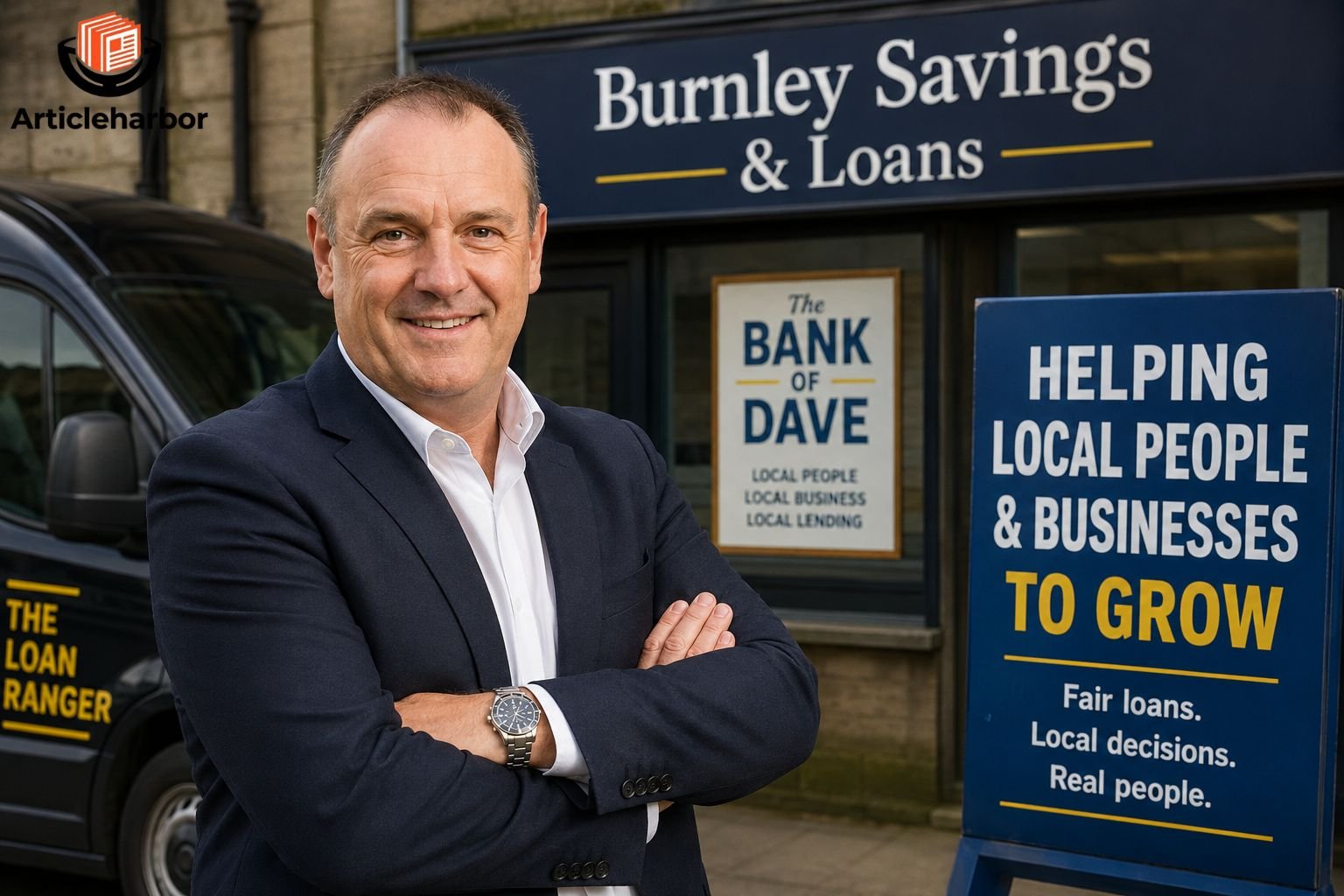
Dave Fishwick is more than a familiar face from television. He is a self-made British entrepreneur, a businessman from Burnley, and the real-life inspiration behind Bank of Dave. His story stands out because it is not built around polished boardroom language or distant corporate success. It is built around hard work, common sense, trust, and a strong belief that business should help real people.
Born in Lancashire, Fishwick left school at 16 and built his career from the ground up. He became known through his minibus business and later gained national attention for creating Burnley Savings and Loans, widely known as the “Bank of Dave,” after seeing how traditional banks failed ordinary people and small businesses following the financial crisis. His journey has been featured in Channel 4 documentaries and Netflix films, including Bank of Dave and Bank of Dave 2: The Loan Ranger.
For entrepreneurs, small business owners, and anyone trying to build something meaningful in 2026, Dave Fishwick’s story offers practical lessons that still feel refreshingly honest.
BIO
| Label | Information |
|---|---|
| Full Name | Dave Fishwick |
| Profession | Entrepreneur and TV Personality |
| Nationality | British |
| Birthplace | Burnley, Lancashire, England |
| Known For | Bank of Dave |
| Main Business | Burnley Savings and Loans |
| Industry | Finance and Business |
| Famous TV Show | Bank of Dave |
| Business Style | Honest and customer-focused |
| Key Strength | Helping small businesses |
| Popular Lesson | Build trust before profit |
| Years Active | Since the 1990s |
| Inspiration | Self-made business success story |
Start Small but Think Bigger
One of the clearest lessons from Dave Fishwick’s career is that you do not need a perfect beginning to build something successful. He did not start with a privileged background, a famous surname, or a ready-made business empire. His success came from spotting opportunities, working hard, and learning by doing.
This is an important reminder for 2026, especially when many people feel they need huge funding, expensive branding, or viral attention before they can start. Fishwick’s journey shows that starting small is not a weakness. It can actually be an advantage because it teaches discipline, patience, and resilience.
A business does not have to begin perfectly. It only has to begin with a real purpose and the willingness to improve.
Solve Real Problems
Dave Fishwick became widely known because he focused on a real problem: people and small businesses struggling to access fair finance. After the 2008 financial crisis, many high-street banks became more cautious with lending. Fishwick saw customers and local businesses being turned away, so he looked for a different way to support them.
This is one of the strongest business lessons in his story. The best businesses usually do not chase trends first. They solve problems first.
In 2026, markets are crowded. There are endless online businesses, coaches, apps, and services competing for attention. But the businesses that last are often the ones that understand what people truly need. Fishwick’s success reminds entrepreneurs to ask simple but powerful questions: What problem am I solving? Who am I helping? Why should people trust me?
When a business is built around a genuine need, marketing becomes easier because the value is clear.
Trust Is Real Currency

Trust has always mattered in business, but it matters even more now. Customers are more careful, more informed, and more likely to research before they buy. Dave Fishwick’s public image has remained strong because people see him as direct, practical, and community-minded.
His “Bank of Dave” story became popular because it felt different from the usual financial world. It was not just about money. It was about fairness, access, and giving people a chance. Burnley Savings and Loans presents itself as an ethical lender focused on helping people and businesses rather than simply chasing maximum profit.
For business owners, the lesson is clear. Reputation is not something you build after success. It is part of the success itself.
Every promise you keep, every customer you treat fairly, and every honest decision you make becomes part of your brand. In a world where bad reviews and poor service can spread quickly, trust is one of the strongest competitive advantages a business can have.
Be Brave Enough to Challenge the System
Dave Fishwick’s story is inspiring because he did not simply complain about the financial system. He tried to do something about it. Taking on big banks and financial institutions was never going to be easy, but his willingness to challenge established systems made his story powerful.
This lesson matters in 2026 because many industries still have old habits, slow processes, and outdated assumptions. Entrepreneurs who succeed often do so by noticing where customers are being ignored or underserved.
Challenging the system does not always mean fighting huge institutions. Sometimes it means offering better service, simpler pricing, clearer communication, or a more human approach. Fishwick’s example shows that business courage is not about being reckless. It is about seeing something unfair or inefficient and having the determination to offer a better option.
Stay Close to Ordinary People
One reason Dave Fishwick connects with the public is that he does not speak like someone removed from everyday life. His brand is rooted in Burnley, local business, and working-class values. That connection has helped make his story relatable across television, film, and public media.
The Netflix film Bank of Dave brought his story to a wider audience by focusing on a Burnley businessman trying to support local businesses and challenge powerful financial interests. Although the film uses fictional elements for drama, its emotional appeal comes from the real idea behind Fishwick’s work: ordinary people deserve fair chances.
For modern entrepreneurs, this is a valuable lesson. Do not become so focused on growth charts and online metrics that you forget the people behind the numbers. Real customers have real worries, budgets, hopes, and frustrations.
A business that listens carefully will often outperform one that only sells loudly.
Make Your Brand Human
Dave Fishwick’s brand works because it feels human. He is not known for corporate polish. He is known for being straightforward, energetic, and passionate about helping people. That human quality has made his business story easier to remember.
In 2026, personal branding is more important than ever. Whether you run a local company, an online store, a consultancy, or a service business, people want to know who they are buying from. They want confidence, personality, and authenticity.
This does not mean oversharing or trying to become famous. It means showing the values behind the business. It means communicating clearly. It means letting customers feel there is a real person behind the product or service.
Fishwick’s public success proves that a strong business personality can make a serious message more accessible.
Use Success to Help Others
A major part of the Dave Fishwick story is the idea that business should not only serve the owner. It should also serve the community. Burnley Savings and Loans has been associated with supporting local people and businesses, and Fishwick’s story is often framed around fairness, charity, and community impact.
This is not just a moral lesson. It is also a business lesson.
Customers increasingly care about how companies behave. They notice whether a business treats people well, supports useful causes, and contributes something positive. A company does not have to be huge to make an impact. Even small businesses can support local communities, mentor young people, pay fairly, or offer honest advice.
When success is shared, it becomes more meaningful. It also creates deeper loyalty.
Learn by Doing
Dave Fishwick’s career shows that business education does not only happen in classrooms. Practical experience can teach lessons that books cannot. From buying and selling vehicles to building finance-related ventures, his journey reflects a hands-on approach.
This matters because many aspiring entrepreneurs wait too long. They keep planning, researching, and comparing themselves to others. Of course, research is important. But at some point, progress comes from action.
You learn what customers want by speaking to them. You learn pricing by testing offers. You learn marketing by publishing, measuring, and improving. You learn leadership by managing real problems.
Fishwick’s story reminds people that confidence often comes after action, not before it.
Take Calculated Risks
Every business journey involves risk. Dave Fishwick’s path included taking chances, entering difficult industries, and putting his reputation behind bold ideas. But the key lesson is not to take reckless risks. It is to take calculated ones.
A calculated risk means you understand the downside, prepare carefully, and act with a clear reason. It means you are brave, but not careless.
For entrepreneurs in 2026, this is especially important. Economic pressure, fast-changing technology, and competitive markets can push people into rushed decisions. Fishwick’s example suggests a better approach: trust your instincts, but support them with practical thinking.
Risk is part of business, but good judgment keeps ambition from becoming chaos.
Keep Adapting
Dave Fishwick has not remained known for just one business activity. His story has moved through vehicle sales, finance, television, documentaries, films, and wider public recognition. His work has also inspired entertainment projects, including Netflix adaptations and a stage musical version of the Bank of Dave story.
That ability to remain relevant is a lesson in itself. Markets change. Customer habits change. Media changes. A business owner who refuses to adapt can quickly fall behind.
In 2026, adaptability is not optional. Business owners need to understand technology, customer expectations, digital trust, and changing economic conditions. But adapting does not mean abandoning your values. Fishwick’s story shows that you can evolve while keeping the same core message.
The tools may change, but the values can stay consistent.
Speak Simply
Another underrated lesson from Dave Fishwick is the power of plain language. Finance can feel complicated and intimidating, but his public communication often cuts through that complexity. He explains things in a way ordinary people can understand.
This is a major advantage in business. Many companies lose customers because they overcomplicate their message. They use too much jargon, make pricing confusing, or hide behind vague promises.
Simple communication builds confidence. It tells customers that you respect their time. Whether you are writing a sales page, explaining a service, or speaking to a client, clarity matters.
If people understand what you do and why it helps them, they are far more likely to trust you.
Stand for Something
Dave Fishwick’s business story is memorable because it has a clear point of view. He stands for fairer finance, local support, and challenging powerful systems when they fail ordinary people. That strong positioning is one reason his story works so well on television and film.
Businesses that stand for nothing often struggle to be remembered. They may offer decent products, but they lack emotional connection. A clear mission gives people a reason to care.
This does not mean every business needs a dramatic cause. But every business should know what it stands for. Better service. Honest pricing. Local support. Sustainability. Craftsmanship. Customer education. Community value.
When a business has a clear belief, it becomes easier to build a loyal audience.
Do Not Forget Your Roots
Despite his media success, Dave Fishwick’s story remains strongly connected to Burnley and Lancashire. That local identity is part of what makes his journey appealing. It gives his success a sense of place, personality, and honesty.
For business owners, this is a reminder not to erase the story that shaped you. Your background, values, struggles, and community can become part of your strength. People connect with real stories because they feel personal and believable.
In a digital world where many brands look and sound the same, your roots can help you stand out.
Turn Setbacks Into Fuel
No inspiring business story is free from difficulty. Dave Fishwick faced challenges from financial systems, public scrutiny, regulation, and the pressure of turning a bold idea into something workable. His story became compelling because he kept pushing forward.
Setbacks are part of every serious business journey. Products fail. Customers leave. Costs rise. Plans change. Competitors copy. But the difference between a short-lived idea and a lasting business is often persistence.
The lesson is not to romanticize struggle. It is to learn from it. Setbacks can reveal weak points, sharpen decisions, and build stronger judgment.
Lessons for 2026 Entrepreneurs
The most inspiring Dave Fishwick business lessons for 2026 are practical, not complicated. Start where you are. Solve real problems. Build trust. Speak clearly. Stay human. Take smart risks. Help others. Keep adapting.
These lessons matter because business in 2026 can feel noisy and overwhelming. There is pressure to chase trends, automate everything, and look successful before you are stable. Fishwick’s journey offers a more grounded view of success.
Build something useful. Treat people properly. Keep your word. Work hard when no one is watching. Stay close to your customers. That approach may sound simple, but it is still powerful.
Final Thoughts
Dave Fishwick’s story continues to inspire because it feels honest. He represents a type of entrepreneur who does not wait for permission, does not hide behind excuses, and does not forget the people around him. His journey from humble beginnings to national recognition shows that business success can be both profitable and meaningful.
For anyone building a company, side hustle, personal brand, or local service in 2026, the message is clear: success is not only about money. It is about purpose, trust, courage, and the impact you leave behind.
Dave Fishwick’s most valuable business lesson may be this: build something that helps people, and people will remember why you built it.
FAQs
Who is Dave Fishwick?
Dave Fishwick is a British entrepreneur, businessman, and television personality from Burnley. He became famous for creating Burnley Savings and Loans and inspiring the Bank of Dave films.
What is Dave Fishwick best known for?
He is best known for challenging traditional banking systems and helping small businesses and local communities access fair lending opportunities.
What can entrepreneurs learn from Dave Fishwick?
Entrepreneurs can learn the importance of trust, hard work, authenticity, customer service, and solving real-world problems through business.
Is Dave Fishwick still active in business in 2026?
Yes, Dave Fishwick remains active in business and public media projects while continuing to inspire entrepreneurs through his story and business philosophy.
Why is Dave Fishwick considered inspiring?
People admire Dave Fishwick because he built success from humble beginnings and stayed committed to helping ordinary people rather than focusing only on profits.